What you need
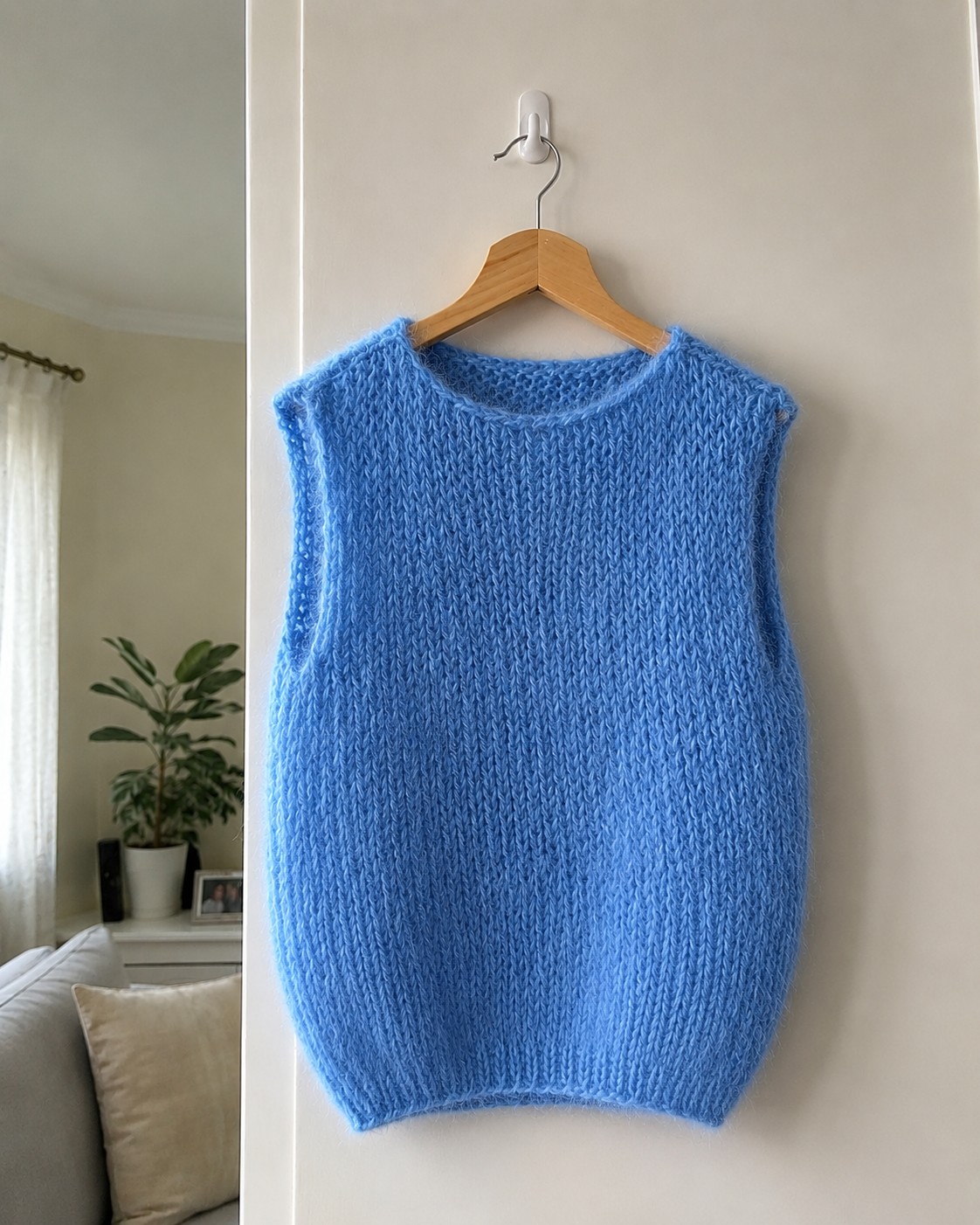
| Sizes | XS, S, M, L, XL and 2XL — to fit chest 28 to 40 inches, finished chest 32 to 43 1/2 inches with about 3 3/4 inches of ease, and a hem that flares 3 1/2 to 4 1/2 inches wider than the chest. The vest photographed is size S. |
|---|---|
| Yarn | Super-bulky brushed mohair or alpaca blend with a long colour gradient, about 110 yd / 100 m per 100 g ball. 167 to 289 yards — just 2 to 3 balls depending on size, counted stitch by stitch from the pattern itself, including 8% for swatching and finishing. |
| Needles & notions | US 19 / 15 mm circular (24 in) for the body, and a pair of US 17 / 12 mm double-pointed needles for the i-cord — a size down keeps the cord firm. Two markers for the sides and a blunt tapestry needle, and that is the whole list. |
| Gauge (tension) | 7 sts and 9 rows = 4 inches in stockinette on US 19 / 15 mm, blocked. At this size one stitch is more than half an inch wide, so the pattern shows you how to check your swatch carefully — a single stitch out at the chest is over an inch of fit. |
Skills you’ll use
- Knit and purl — stockinette in the round and flat
- Working in the round on a circular needle, then dividing at the underarm
- A handful of paired decreases for the A-line and the armholes
- Picking up stitches along an edge
- The 3-stitch applied i-cord, taught with a diagram
- Two small shoulder joins
What’s in the PDF
- 15-page PDF, fully graded for six sizes, XS to 2XL
- Finished measurements for every size, plus every stitch and row count
- A note on knitting with a long-gradient yarn, and why the colours band
- A diagram of the applied i-cord, showing exactly how it eats the edge
- The vest drawn laid flat, front and back, with every cord marked
- A measured schematic, with the reasoning behind every proportion
- Row-by-row instructions: body, front, back, shoulders and all three cords
- Finishing, blocking and a troubleshooting table
Questions about this pattern
How quick a knit is this really?
About as quick as a garment gets. At 7 stitches to 4 inches the whole body is only 62 to 84 stitches around, there are just 42 to 57 rows from hem to shoulder, and there is no purling at all below the underarm — you knit round and round and the gradient yarn does the decorating. Most knitters will finish it in a weekend or two.
Why do the colours come out in stripes?
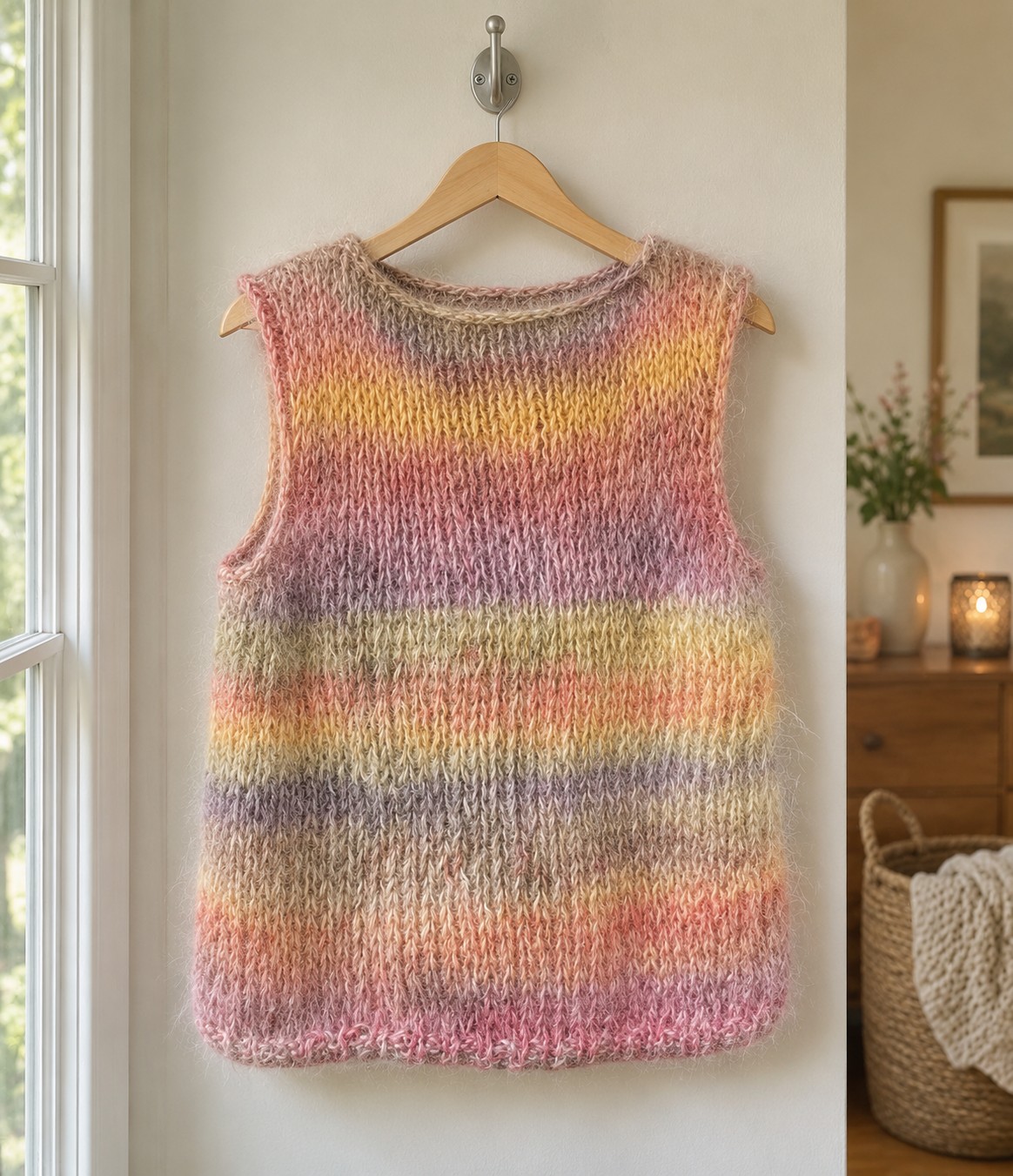
Because the body is worked in the round, one circuit uses a long stretch of the gradient, so the colour moves slowly and lays itself down in broad, soft horizontal bands — no colour changes, no second ball, no planning. Above the underarm the front and back are worked separately, so the bands step slightly there; that is normal, and you can see it in the photographs too.
There's no ribbing — won't the edges roll?
They would, if they were left bare: stockinette always rolls. That is exactly what the applied i-cord is for. It is a firm little three-stitch cord worked onto the hem, armholes and neck as you go, and it does the job a rib border normally does — it weighs the edges down flat and gives every opening a smooth, finished chain edge. The pattern teaches it with a diagram, and it is easier than it looks.